
How do you approach debugging complex code? Do you have any tips or best practices that help you efficiently identify and resolve bugs in your projects?
Loading
How do you approach debugging complex code? Do you have any tips or best practices that help you efficiently identify and resolve bugs in your projects?
Know the answer? Post it — somebody with the same question will find it here.
Sign in to answer this question
It is the same account you read, post and publish with — and you will come straight back to this page.
Sophia CarterPosted Feb 27, 2025, 8:45 AM
When it comes to debugging complex code, having a systematic approach can make all the difference in efficiently identifying and resolving bugs in your projects. Here are some tips and best practices that can help you master the art of debugging:
1. Understand the Code: Before diving into fixing a bug, take the time to understand the codebase. This includes the architecture, design patterns, and dependencies. Having a clear understanding of how the code works can greatly aid in pinpointing potential issues.
2. Reproduce the Bug: One of the key steps in debugging is being able to reproduce the bug consistently. Try to narrow down the conditions that trigger the bug so that you can focus your debugging efforts effectively.
3. Use Debugging Tools: Leverage debugging tools provided by your IDE or specific debugging tools like Chrome DevTools for web applications. Tools like breakpoints, watches, and step-through debugging can help you inspect the state of your code at different points and track down the root cause of the issue.
4. Check Logs and Error Messages: Pay close attention to error messages and log output. They can often provide valuable clues about what's going wrong in your code. Make sure to analyze them carefully as they can lead you to the buggy code.
5. Isolate the Issue: If you have a large codebase, try to isolate the problem by breaking down the code into smaller sections or modules. This can help you narrow down the scope of your search and make the debugging process more manageable.
6. Test Small Changes: When making changes to fix a bug, do it incrementally and test after each change. This way, you can identify which specific change caused the fix or regression.
7. Pair Programming: Sometimes debugging can benefit from a fresh pair of eyes. Pair programming with a colleague can help in spotting bugs that you might have overlooked.
8. Documentation and Communication: Keep track of the bugs you find, the solutions you apply, and any insights gained during the debugging process. This documentation can be valuable for future reference and for sharing knowledge with your team.
By following these debugging tips and best practices, you can streamline your debugging process and become more proficient at tackling complex code issues effectively. Remember, debugging is as much about patience and perseverance as it is about technical skills. Happy debugging!
Tuhin PaulPosted Feb 28, 2025, 7:13 PM
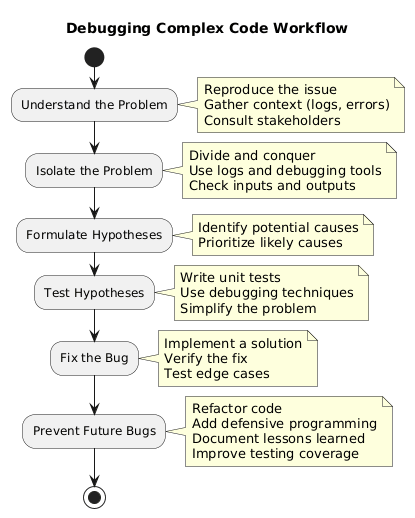
check the image:
Tuhin PaulPosted Feb 28, 2025, 7:12 PM
1. Understand the Problem
2. Isolate the Problem
console.log,print, etc.) to track variable values and program flow.3. Formulate Hypotheses
4. Test Your Hypotheses
5. Fix the Bug