

Introduction
The software development life cycle (SDLC) is the process followed by an organization when building a new software product or updating an existing product. Build a new software product or application is a complex process and requires several team members to collaborate to work together. The team members include business stakeholders, project managers, architects, analysts, developers, testers, and the IT team. The size of the team depends on the size and complexity of the project.
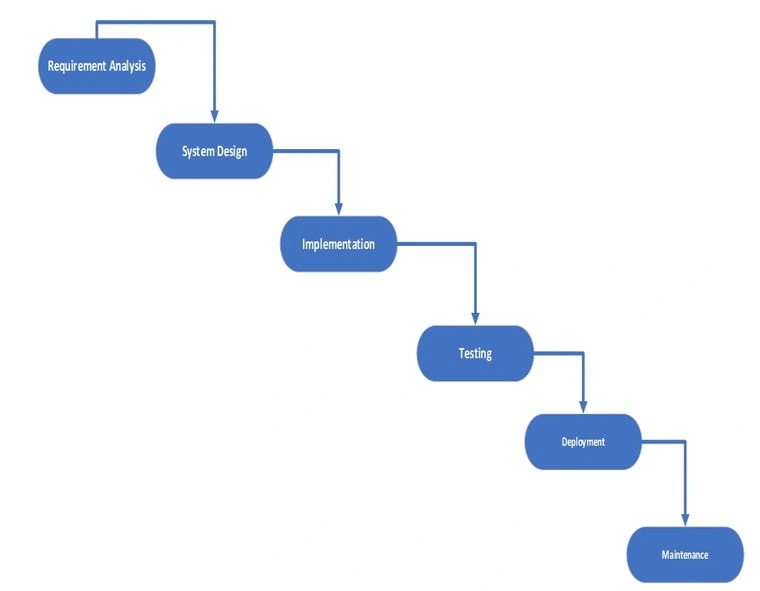
SDLC has six key phases. The following figure describes the graphical representation of these phases of SDLC.
Project Planning
Before a project development process starts, the planning is the most important steps of SDLC. This step is performed by senior members of the team because a big project requires more efficient planning to make the project successful. Likewise, a small project also requires planning, but if, at the start of the project, you make a mistake and miss any prerequisites, then your project will require two to three times of revisions. This is the worst part of development. In this step, we identify quality assurance procedures and risks associated with the project. The outcome of this step is used in the feasibility study of the project. Project feasibility defines the various procedures that can be followed for the successful delivery of a project with minimum risks.
Phase 1. Requirements Gathering and Analysis
Defining requirements or requirements gathering is the most important part of the software development life cycle. The process of gathering the software requirement from customers or the end users and then analyzing those requirements and documenting them is called requirement engineering or requirement elicitation. If the feasibility report is positive from all aspects, then we start the requirement elicitation process. In this process, we start requirement engineering. We use different techniques to get requirements for the project. We discuss the feature and functionalities of the system and identifies the user and stakeholders.
This phase involves the following detailed steps:
Identify stakeholders: Determine the individuals or groups who have a vested interest in the software project. This can include clients, end-users, business analysts, subject matter experts, and other relevant parties.
Conduct initial meetings: Schedule meetings with stakeholders to initiate discussions about their needs, expectations, and goals for the software. Gather high-level information about the project scope, objectives, and constraints.
Create functional and non-functional requirements: Use various techniques, such as interviews, questionnaires, workshops, and observations, to gather detailed requirements. Understand the functional requirements (what the software should do) and non-functional requirements (quality attributes like performance, security, usability) as well as any specific technical requirements.
Analyze requirements: Review and analyze the gathered requirements for completeness, consistency, and feasibility. Identify any potential conflicts or ambiguities in the requirements and resolve them through further discussions and clarifications with stakeholders.
Prioritize requirements: Collaborate with stakeholders to prioritize the identified requirements based on their importance, urgency, and business value. This helps in resource allocation and planning for subsequent phases.
Document requirements: Create comprehensive documentation that captures the requirements in a clear and unambiguous manner. This documentation serves as a reference for the development team and other stakeholders throughout the SDLC.
Validate requirements: Validate the requirements with stakeholders to ensure that they accurately reflect their needs and expectations. Seek feedback, conduct reviews, and address any concerns or discrepancies before proceeding to the next phase.
Obtain sign-off: Seek formal approval or sign-off from stakeholders to indicate their agreement with the documented requirements. This signifies their acceptance of the defined scope and serves as a baseline for the subsequent phases.
Manage requirements changes: Establish a process for managing changes to requirements. This includes defining change control procedures, assessing the impact of proposed changes, and obtaining approvals for modifications to the requirements baseline.
Create a requirements traceability matrix: Develop a traceability matrix that links the requirements to their sources, dependencies, and associated test cases. This helps in ensuring that all requirements are adequately addressed and tested throughout the SDLC.
Phase 2. Design
Design and architecture phase is the role of technical team, mostly architects and leads to create the blueprint of the software. This plase involves transforming the gathered requirements into a detailed system design. The detailed system design is used as a guideline by the technical team to write software.
Here are the detailed steps involved in this phase:
Architectural Design: Identify and define the overall system architecture. This includes determining the structure of the software system, the components/modules involved, their interactions, and the allocation of functionality to different components.
Database Design: Design the database structure that will store and manage the data required by the software system. This includes defining the tables, relationships, constraints, and any necessary indexes or data access mechanisms.
User Interface Design: Design the user interface (UI) that will be used by the end-users to interact with the software system. This involves creating wireframes, mockups, or prototypes to visualize the layout, navigation, and overall user experience.
Component Design: Break down the system into smaller components or modules and design each component in detail. Define the interfaces, dependencies, and interactions between the components. This step can involve creating detailed design documents, class diagrams, or other appropriate design artifacts.
Algorithm Design: If the software system requires complex algorithms or logic, design and document the algorithms in detail. This includes defining the step-by-step processes, data structures, and computational methods to be used.
Security Design: Assess the security requirements of the software system and design appropriate security measures. This can include user authentication, data encryption, access controls, and other security mechanisms.
Performance Design: Consider the performance requirements of the software system and design for optimal performance. This can involve selecting appropriate algorithms, optimizing data access, considering caching strategies, and addressing potential bottlenecks.
Error Handling and Exception Design: Plan for error handling and exception scenarios. Define how the software system will handle errors, exceptions, and unexpected situations, including error logging, error messages, and recovery mechanisms.
Documentation: Create detailed design documentation that describes the system design, including architectural diagrams, database schema, UI wireframes, component specifications, and any other relevant design artifacts.
Review and Validation: Conduct design reviews to ensure that the design aligns with the requirements, is technically feasible, and meets quality standards. Seek feedback from stakeholders and make necessary refinements to the design.
By following these steps in the system design phase, the development team can create a comprehensive blueprint for the software system. This ensures that the subsequent phases, such as implementation, testing, and deployment, are based on a solid and well-defined design that addresses the requirements and aligns with the desired functionality, performance, security, and user experience
Step 4. Implementation
This phase of the Software Development Life Cycle (SDLC) is implementation/coding. It involves the actual coding and development of the software based on the requirements and design specifications. This is the longest phase of SDLC. Here are the detailed steps involved in this phase:
Set up the development environment: Prepare the development environment by installing the necessary software tools, libraries, and frameworks required for coding. This includes setting up integrated development environments (IDEs), compilers, version control systems, and other development tools.
Create the program structure: Define the overall structure of the software program, including the main modules or components and their relationships. This involves organizing the codebase and creating the necessary directories or packages.
Write code: Implement the functionality of the software system by writing the actual code using the chosen programming language(s) and following coding standards and best practices. Divide the coding tasks into smaller units or functions for easier development and testing.
Code documentation: Document the code by adding comments and annotations to explain its purpose, logic, and any complex or critical sections. Good code documentation helps other developers understand the code and facilitates maintenance and future enhancements.
Follow coding guidelines: Adhere to coding guidelines or style guides specific to the programming language or organization. This promotes consistency, readability, and maintainability of the codebase.
Use version control: Utilize a version control system (e.g., Git) to track changes to the codebase, collaborate with other developers, and manage code versions. Follow best practices such as branching and merging to manage code changes effectively.
Reusability and modularity: Emphasize code reusability and modularity by creating functions or modules that can be easily reused in different parts of the software or in future projects. This helps in reducing redundancy, improving maintainability, and promoting efficient development.
Implement error handling: Incorporate error handling mechanisms into the code to handle exceptions, error conditions, and unexpected situations. Use appropriate exception handling techniques and error reporting mechanisms.
Perform unit testing: Write unit tests to verify the correctness and functionality of individual units or components of the software. Execute the tests to ensure that the code behaves as expected and passes the defined test cases.
Code review: Conduct code reviews to get feedback from other developers or team members. Reviewers can identify potential bugs, suggest improvements, and ensure adherence to coding standards.
Refactoring: Refactor the code as needed to improve its quality, readability, and performance. This includes restructuring the code, optimizing algorithms, eliminating code smells, and improving the overall code design.
Integration: Integrate the developed components or modules into a cohesive software system. This involves ensuring that the individual parts work together seamlessly and the interfaces between components are properly connected.
Step 5. Testing
Testing phase does not get enough attention but it is another important phase of a project. To make a project successful, the testing of the project must be a priority. It involves verifying and validating the software to ensure that it meets the specified requirements and functions as intended. Testing helps identify defects, errors, or discrepancies in the software and allows for their resolution before deployment. Here are the detailed steps involved in the testing phase:
Test Planning: Define the testing objectives, scope, and test strategy. Identify the types of testing to be performed, such as unit testing, integration testing, system testing, performance testing, security testing, and user acceptance testing (UAT). Determine the test environments, test data, and resources required.
Test Case Design: Create detailed test cases or test scenarios that cover different aspects of the software functionality and requirements. Test cases should include input data, expected outputs, and any specific conditions or steps to be followed.
Test Environment Setup: Set up the necessary test environments, including hardware, software, and network configurations, to simulate the target production environment as closely as possible. This ensures that the testing accurately reflects real-world conditions.
Test Data Preparation: Prepare test data that represents a variety of scenarios, including valid inputs, invalid inputs, boundary cases, and edge cases. The test data should cover different combinations of inputs and exercise all relevant functionality of the software.
Execute Test Cases: Execute the designed test cases systematically, following the test plan. Record the actual results and compare them with the expected results. Identify and report any discrepancies, defects, or failures encountered during the testing process.
Defect Reporting and Tracking: Log and report any identified defects or issues using a defect tracking system or bug tracking tool. Include detailed information such as steps to reproduce the defect, screenshots, and other relevant data. Assign priorities and severities to the reported defects.
Defect Resolution: Collaborate with the development team to analyze and resolve the reported defects. Developers fix the identified issues and perform necessary code changes or modifications. The fixed code undergoes retesting to verify the defect resolution.
Regression Testing: Conduct regression testing to ensure that the changes made to fix defects or implement new features have not introduced any unintended side effects or regressions. Regression testing involves rerunning previously executed tests to validate the unchanged portions of the software.
Retesting: Retest the previously failed or fixed test cases to ensure that the reported defects have been successfully resolved and the software functions as expected. This helps in verifying the correctness and stability of the software after defect resolution.
Performance Testing: If performance requirements exist, conduct performance testing to evaluate the software's behavior under expected workloads. This can include load testing, stress testing, scalability testing, or endurance testing to assess the software's performance, response times, and resource utilization.
Security Testing: Perform security testing to identify vulnerabilities, threats, or weaknesses in the software system. This involves testing for potential security breaches, unauthorized access, data integrity issues, and other security-related aspects.
User Acceptance Testing (UAT): Collaborate with end-users or client representatives to conduct UAT. Users perform testing from their perspective to validate that the software meets their requirements, expectations, and business needs.
Test Closure: Evaluate the overall testing process, summarize the test results, and provide a testing report. Assess the test coverage, defect density, and other metrics. Identify lessons learned and areas for improvement in future testing efforts.
Step 6. Deployment
The next phase of the Software Development Life Cycle (SDLC) is deployment. It involves the actual release and installation of the software system into the production environment or making it available to end-users. Here are the detailed steps involved in the deployment phase:
Deployment Planning: Develop a deployment plan that outlines the steps, resources, and timelines required for a smooth and successful deployment. Consider factors such as hardware requirements, software dependencies, data migration, and any potential impact on existing systems.
Environment Preparation: Prepare the production environment or target deployment environment by setting up the necessary infrastructure, servers, databases, and network configurations. Ensure that the environment meets the hardware and software requirements of the software system.
Build Generation: Create the release build of the software system, which includes compiling the source code, packaging the executable files, and bundling any required libraries or dependencies. Generate the necessary installation files or artifacts for deployment.
Configuration Management: Manage the configurations and settings required for the software system. This includes setting up appropriate database connections, configuring system parameters, defining security settings, and any other necessary configuration tasks.
Installation and Deployment: Install the software system on the production servers or end-user devices as per the deployment plan. Follow the installation instructions, configure the software components, and ensure that the installation is completed successfully.
Data Migration: If there is existing data that needs to be migrated from legacy systems or previous versions, perform the necessary data migration tasks. Validate and verify the accuracy and integrity of the migrated data.
Integration Testing: Conduct integration testing in the production environment to ensure that the software system functions correctly and seamlessly with other integrated systems or components.
User Training: Provide training and support to end-users or system administrators to familiarize them with the software system and its usage. This may involve conducting training sessions, creating user manuals or documentation, and addressing any questions or concerns.
User Acceptance: Collaborate with end-users or client representatives to perform a final user acceptance review of the deployed software system. Validate that the deployed system meets the agreed-upon requirements and satisfies the end-users' needs.
Post-Deployment Support: Provide post-deployment support and address any issues or concerns reported by end-users. Monitor the system's performance, address bug fixes or software patches, and ensure a smooth transition to the maintenance phase.
Handover and Documentation: Prepare handover documentation that includes relevant information about the deployment process, installation instructions, configurations, and any known issues or workarounds. Provide the necessary documentation to system administrators or support teams for ongoing maintenance and support.
Project Closure: Evaluate the deployment process and ensure that all the deployment activities have been completed successfully. Conduct a project review or retrospective to assess the overall project performance, gather feedback, and identify lessons learned for future deployments.
Step 7. Maintenance
Maintenance is the last phase of the Software Development Life Cycle (SDLC) is maintenance. It involves the ongoing support, enhancement, and maintenance of the software system after it has been deployed. The maintenance phase aims to address any issues, bugs, or user requests, as well as make improvements and updates to the software. Here are the detailed steps involved in the maintenance phase:
Issue Identification: Gather feedback from end-users, system administrators, or support teams to identify any issues, defects, or bugs in the software system. This can be done through user reports, bug tracking systems, customer support channels, or other communication channels.
Issue Logging and Prioritization: Log and document the identified issues in a tracking system or issue management tool. Assign priorities to each issue based on its severity, impact, and urgency. Prioritization helps in managing resources effectively and addressing critical issues first.
Issue Resolution: Fix the identified issues by making the necessary code changes, modifications, or configuration adjustments. Follow established software development practices, such as coding standards, testing, and quality assurance, to ensure the correctness and stability of the fixes.
Regression Testing: After fixing an issue, perform regression testing to verify that the fix has not introduced any new issues or regressions in the software system. Re-execute relevant test cases to ensure that the existing functionality remains intact.
Release Management: Plan and schedule software releases that bundle the resolved issues and updates into new software versions or patches. Determine the release scope, impact on users, and any necessary release notes or documentation to accompany the new release.
Deployment: Deploy the software updates or patches to the production environment or distribute them to end-users as per the release plan. Ensure that the deployment process is carefully managed to minimize disruption and ensure a smooth transition.
User Support: Provide ongoing user support and address any queries, concerns, or issues reported by end-users. This can include troubleshooting assistance, guidance on software usage, and clarifications on features or functionalities.
Enhancements and Updates: Evaluate user feedback, market trends, and changing requirements to identify opportunities for software enhancements or updates. Plan and prioritize new features, improvements, or modifications based on user needs and business priorities.
Documentation Updates: Update the software documentation, including user manuals, technical guides, and release notes, to reflect the changes, fixes, and new features introduced in the software system. Ensure that the documentation is kept up to date and easily accessible to users and support teams.
Performance Monitoring: Continuously monitor the performance of the software system in the production environment. Analyze system logs, collect performance metrics, and identify areas for optimization or scalability improvements.
End-of-Life Planning: Determine the end-of-life strategy for the software system, considering factors such as business requirements, technological advancements, and user needs. Plan for software retirement, data migration, or transition to newer systems, if necessary.
Benefits of SDLC
The key benefits of following the SDLC include:
Improved project management: The SDLC provides a systematic framework for managing software development projects. It helps in defining project scope, setting milestones, estimating resources, and managing risks, leading to better project planning and control.
Enhanced quality assurance: The SDLC incorporates quality assurance activities at each phase, including requirements gathering, design, development, testing, and deployment. By following a structured approach, it ensures that software products are thoroughly tested, validated, and verified, resulting in higher quality and reliability.
Increased efficiency and productivity: SDLC promotes a disciplined and organized approach to software development. It streamlines the development process, facilitates collaboration among team members, and optimizes resource allocation. This leads to improved efficiency, reduced rework, and increased productivity.
Clear communication and stakeholder involvement: SDLC emphasizes the involvement of stakeholders, including clients, end-users, developers, and testers, throughout the development cycle. It encourages regular communication, feedback, and collaboration, ensuring that everyone has a clear understanding of project requirements and objectives.
Effective risk management: SDLC includes risk assessment and mitigation strategies as an integral part of the development process. It helps identify potential risks, such as technical challenges, resource constraints, or schedule delays, and provides a framework for managing and minimizing those risks.
Scalability and maintainability: By following a structured approach, the SDLC promotes the use of modular and well-documented code. This makes software systems easier to scale, modify, and maintain over time. It also enables future enhancements and reduces the complexity of managing large-scale software projects.
Compliance and regulatory adherence: The SDLC can incorporate compliance and regulatory requirements specific to the software domain. It ensures that the software development process aligns with industry standards, security protocols, and legal obligations, minimizing the risk of non-compliance and associated penalties.
Cost and time optimization: By providing a structured roadmap, the SDLC helps in estimating project timelines, resource requirements, and associated costs. It enables effective project planning, resource allocation, and time management, leading to cost optimization and timely delivery of software products.
In my upcoming articles, I will discuss various software process models and their importance in software developmet.
SLDC has different development models including waterfall, prototype, spiral, and iterative.
Amer SheenyPosted Jan 29, 2026, 6:37 AM
Nice piece!
Sardar Mudassar Ali KhanPosted Jul 31, 2023, 5:50 PM
Download Complete Book From Given Below Url : https://www.amazon.com/dp/B0B94VRT2Y