

Understanding Isolation
Virtualization is a transformative technology that allows multiple virtual machines (VMs) to run on a single physical server, providing efficiency, cost savings, and scalability. A critical component of this technology is isolation. This article explores the concept of isolation in virtualized environments, its benefits, and how VMware implements it to ensure secure and efficient operations.
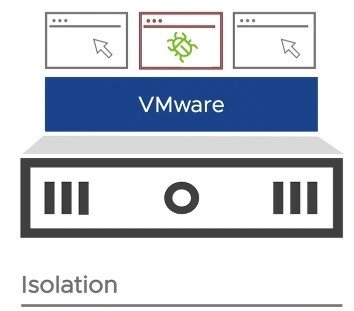
Related Image © VMware
What is Isolation in Virtualization?
Isolation in virtualization refers to the separation of VMs running on the same physical hardware. This separation ensures that each VM operates independently with its own operating system, applications, and resources. The hypervisor, such as VMware ESXi, is the software layer that enables this isolation. By creating and managing VMs, the hypervisor ensures they are insulated from each other, preventing interference and enhancing security.
The Significance of Isolation
Isolation is crucial for several reasons.
- Security: Isolation ensures that each VM is secure and operates independently of others. If one VM is compromised, the isolation mechanisms prevent the spread of malware or unauthorized access to other VMs on the same physical host. This is essential for maintaining a secure environment, especially in multi-tenant data centers where multiple customers' VMs run on the same physical server.
- Resource Management: Effective resource management is another significant benefit of isolation. By isolating VMs, resources such as CPU, memory, and storage can be allocated specifically to each VM. This prevents resource contention and ensures optimal performance for each VM. For instance, a resource-intensive application running in one VM won't impact the performance of other VMs on the same host.
- Stability: Isolation enhances system stability. In a virtualized environment, the failure or performance degradation of one VM does not affect others. This is particularly important for maintaining uptime and reliability in production environments. Each VM can be managed and maintained independently, reducing the risk of widespread outages.
- Testing and Development: Isolation is particularly beneficial in testing and development environments. Developers can test applications in isolated VMs without affecting the production environment. This enables thorough testing of new applications and updates, ensuring they are stable and secure before deployment.
How VMware Implements Isolation?
VMware’s hypervisor, ESXi, is designed to enforce strict isolation between VMs. Here are some key techniques used by VMware to achieve this.
- Hardware Abstraction: VMware abstracts the physical hardware to create a virtualized environment. Each VM is provided with a virtual set of hardware resources, including virtual CPUs, memory, storage, and network interfaces. This abstraction ensures that VMs are insulated from each other and do not directly access the physical hardware.
- Memory Segmentation: Each VM is allocated its own segment of memory. The hypervisor uses memory virtualization techniques to ensure that VMs cannot access each other’s memory. This segmentation prevents memory corruption and data leakage between VMs.
- CPU Scheduling: The hypervisor controls access to the physical CPUs by scheduling CPU time for each VM. This ensures that no single VM can monopolize CPU resources, allowing fair distribution of processing power among all VMs. CPU scheduling also prevents VMs from interfering with each other’s operations.
- Network Segmentation: VMware implements virtual networking to isolate network traffic between VMs. Each VM has its own virtual network interfaces and can be assigned to different virtual networks. This segmentation enhances security by preventing network-based attacks from spreading between VMs.
- Storage Isolation: VMware uses virtual storage technologies to ensure each VM has its own dedicated storage resources. VMs are assigned virtual disks, which are isolated from the disks of other VMs. This prevents data corruption and unauthorized access to stored data.
Practical Benefits of Isolation
To fully appreciate the importance of isolation, consider some practical scenarios.
- Multi-Tenant Data Centers: In multi-tenant data centers, isolation ensures that one customer’s VMs do not interfere with another customer’s VMs. This is crucial for maintaining data privacy and security in shared environments.
- Disaster Recovery: Isolation aids in disaster recovery by ensuring that issues in one VM do not affect others. For example, if a VM hosting a critical application fails, other VMs remain unaffected, allowing continued operation of other applications and services.
- Compliance and Regulation: Many industries have strict compliance and regulatory requirements regarding data security and isolation. Virtualization with robust isolation mechanisms helps organizations meet these requirements by providing secure environments for sensitive data and applications.
- Performance Optimization: Isolation allows for precise performance optimization. Administrators can allocate resources to VMs based on their specific needs, ensuring that high-priority applications receive the necessary resources while preventing lower-priority VMs from consuming excessive resources.
Challenges and Solutions
While isolation provides numerous benefits, it also presents challenges.
- Resource Overhead: Maintaining isolation requires additional resources and management overhead. The hypervisor must manage and enforce isolation, which can consume CPU, memory, and storage resources. To address this, VMware optimizes its hypervisor to minimize overhead while maintaining strong isolation.
- Complexity: Managing isolated environments can be complex, especially in large-scale deployments. Administrators need to ensure that VMs are correctly configured and isolated. VMware provides management tools, such as vCenter, to simplify the administration of virtualized environments and ensure effective isolation.
- Inter-VM Communication: In some cases, VMs may need to communicate with each other while maintaining isolation. VMware supports secure communication mechanisms, such as virtual network segmentation and firewall rules, to allow controlled inter-VM communication without compromising isolation.
Conclusion
Isolation is a fundamental principle of virtualization, providing security, stability, and efficient resource management. VMware's robust hypervisor technology ensures that each VM operates in a fully isolated environment, safeguarding against potential threats and enhancing overall system performance. Understanding and leveraging isolation within virtualized environments is essential for maximizing the benefits of virtualization technology. By implementing isolation effectively, organizations can achieve secure, reliable, and high-performance computing environments.
Join the conversation! Your thoughts help the community grow.