

Introduction
Base, an Ethereum Layer 2 (L2) built using the OP Stack, aims to bring scalability and cost-efficiency to decentralized applications without compromising on security. While its modular architecture and integration with Ethereum’s battle-tested security give it an edge, no system is immune to vulnerabilities. This article explores the security risks, known exploit cases (if any), and how Base’s architecture proactively mitigates attack vectors.
1. Understanding the Base Security Model
1.1. OP Stack Foundation
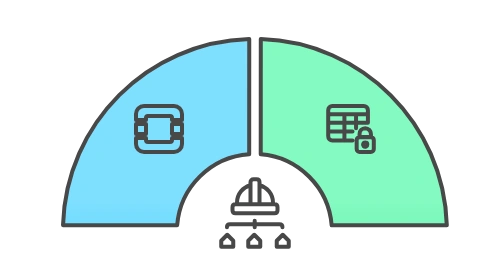
Base uses the Optimism OP Stack, which is composed of modular layers:
- Execution Layer - Runs the application code (EVM-compatible).
- Derivation Layer - Collects L1 Ethereum blocks and derives L2 state updates.
- Sequencer - Temporarily central, responsible for ordering transactions.
1.2. Ethereum as a Settlement Layer
All Base transactions are ultimately settled on Ethereum, which inherits
- Ethereum’s data availability guarantees.
- Ethereum’s finality and consensus.
2. Known Exploits and Security Incidents (2023–2024)
2.1. Bridge Vulnerabilities (General L2 Risk)
-
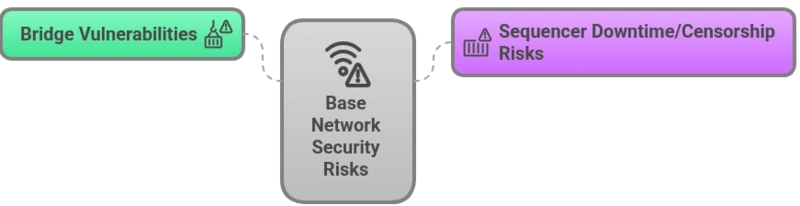
Bridging is the Achilles heel: Although no exploit has been confirmed on Base bridges yet, other L2 bridges have been exploited (e.g., Optimism's token misplacement bug).
-
Base uses StandardBridge contracts, similar to Optimism. A vulnerability in these could propagate.
2.2. Sequencer Downtime / Censorship Risks
-
While no public exploit occurred, centralized sequencers can theoretically censor transactions.
-
Mitigation - Decentralized sequencer roadmap with fault-proof mechanisms in future OP Stack upgrades.
3. Attack Vectors on Base
3.1. Reentrancy & Contract-Level Exploits
- The same EVM rules apply—Base is not immune to poor smart contract patterns.
- Developers must still use ReentrancyGuard, proper access control, and audit practices.
3.2. Fraud Proof Absence (Current OP Stack)
- Current Base implementation does not yet include fraud proofs.
- This exposes Base to honest majority assumptions on sequencing.
- Optimism Bedrock upgrades will add support in the future.
3.3. MEV (Miner Extractable Value)
- MEV exists due to a centralized sequencer.
- Mitigation: Coinbase may use private order flow protection, but this is non-transparent today.
4. Architectural Security Mitigations

4.1. Ethereum Finality Protection
- Transactions must be finalized on Ethereum L1.
- Any L2 manipulation is eventually corrected via L1 replay or rejection.
4.2. Modular Upgradability
- The OP Stack's modularity allows for rapid deployment of security patches.
- Example: Fault-proof module, decentralized sequencer migration.
4.3. Coinbase’s Institutional Security
-
Coinbase’s compliance-driven model enforces:
- KYC/AML standards for integrations.
- Transaction monitoring and anomaly detection.
-
This creates a safer dApp ecosystem compared to fully permissionless chains.
5. Developer Security Best Practices on Base
5.1. Use Security-Aware Toolchains
- Use Slither, MythX, and Tenderly for static and runtime analysis.
- Verify contracts on BaseScan post-deployment.
5.2. Implement Safe Patterns
- Use OpenZeppelin libraries.
- Avoid external contract calls inside loops.
- Prefer pull-over push payments.
5.3. Multi-Sig Governance for Upgrades
- Use multi-signature wallets (Gnosis Safe) for protocol upgrades.
- Implement time-locked upgrades to prevent surprise interventions.
6. Risks Yet to Be Fully Addressed
| Risk | Current Status | Mitigation Plan |
|---|---|---|
| Fraud Proofs | Not Live | OP Stack upgrade pending |
| Sequencer Censorship | Centralized | Roadmap for decentralization |
| MEV Transparency | Limited | Potential private MEV relayers |
| Bridge Security | No major incidents yet | Audit and monitoring tools |
7. The Road Ahead for Base Security
Coinbase and Optimism Foundation are actively collaborating on making the OP Stack more robust:
- Fault proofs coming in 2025.
- Shared sequencer initiatives across L2s.
- Greater transparency into transaction order flow.
Conclusion
Base is built with a forward-thinking security architecture leveraging Ethereum’s strengths, Coinbase’s compliance ecosystem, and the evolving OP Stack. While it hasn’t suffered major exploits so far, proactive risk management, both at the protocol and application level, is essential. Developers building on Base must still treat it like any other production system: with audits, safe patterns, and continuous monitoring.
Join the conversation! Your thoughts help the community grow.