

Introduction
Today I will take a new part of python for my tutorial series. In this part, you will learn Exception Handling.
I already told you the following:
- Installation of Python
- Python Programming tutorial Part-1
- Python Programming Tutorial - Part 2
- Python Language Tutorial Part- 3 (Data Structure in List)
- Python Language Tutorial Part- 5 (Module and Input Output)
Python language has various types of Exception Handling. I will tell you some exception handling in Python and their examples.
Example of Exceptions:
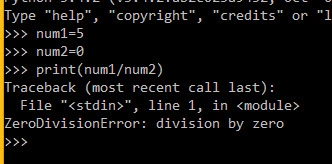
- Num1=5
- Num2=0;
- print(Num1/Num2)
- print(“10”+6)

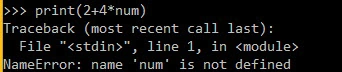
- print(2+4*num)
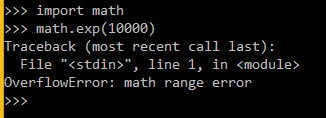
- import math
- math.exp(10000)
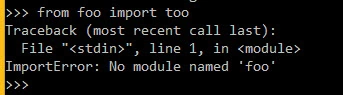
- from foo import too
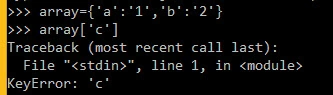
- array={'a':'1','b':'2'}
- array['c']
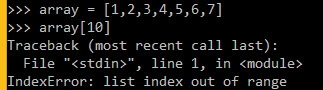
- array = [1,2,3,4,5,6,7]
- array[10]
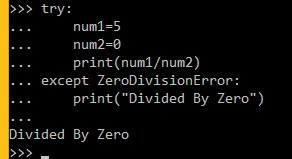
- num1=5
- num2=0
- print(num1/num2)
- except ZeroDivisionError:
- print("Divided By Zero")
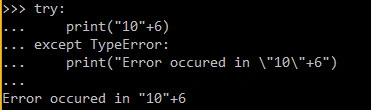
- print("10"+6)
- except TypeError:
- print("Error occured in \"10\"+6")
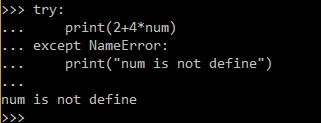
- print(2+4*num)
- except NameError:
- print("num is not define")
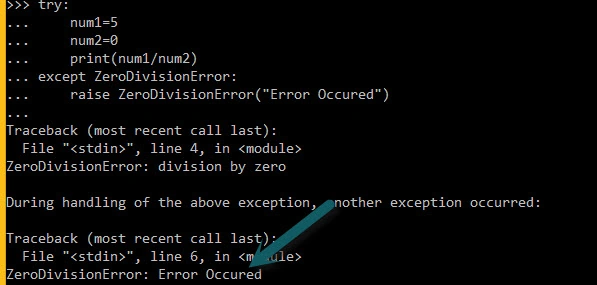
- num1=5
- num2=0
- print(num1/num2)
- except ZeroDivisionError:
- raise ZeroDivisionError("Error Occured")
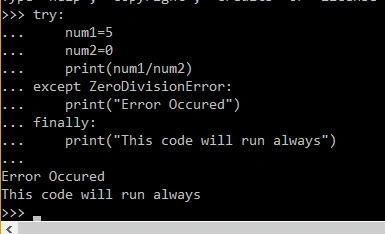
- num1=5
- num2=0
- print(num1/num2)
- except ZeroDivisionError:
- print("Error Occured")
- finally:
- print("This code will run always")
Neeraj KumarPosted May 9, 2016, 12:25 PM
Thank you Kuppurasu Nagaraj
Kuppurasu NagarajPosted May 9, 2016, 11:57 AM
Nice Sharing..