

Introduction
MLOps is the practice of automating and managing the lifecycle of machine learning models. As organizations increasingly adopt machine learning solutions, the need for robust MLOps workflows becomes critical. By integrating GitHub Actions with Azure Machine Learning (Azure ML), you can streamline model training, testing, and deployment, ensuring efficient and repeatable processes.
This article explores how to set up a workflow that automates the process of training and deploying ML models using GitHub Actions and Azure ML.
Why Use GitHub Actions with Azure ML?
GitHub Actions provides a CI/CD (Continuous Integration and Continuous Deployment) pipeline that allows ML engineers and data scientists to automate various stages of the ML lifecycle. Azure ML, on the other hand, offers a scalable cloud-based environment for training and deploying models. The combination of these tools offers:
- ✔ Automated training and retraining of models when new data becomes available.
- ✔ Version control for models, datasets, and configurations.
- ✔ Deployment automation, ensuring that models are pushed to production seamlessly.
- ✔ Integration with monitoring tools to detect drift and trigger retraining when needed.
- ✔ Security and Access Control to define roles and permissions for different team members.
- ✔ Scalability by enabling distributed training on cloud resources efficiently.
Setting Up GitHub Actions for Azure ML
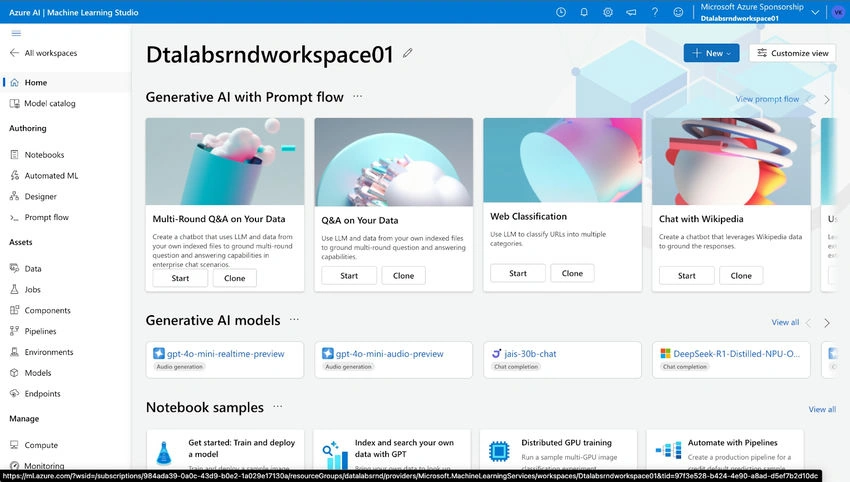
Step 1. Connect Azure ML with GitHub
Before you start, ensure that:
- You have an Azure ML workspace set up.
- Your Azure ML service principal has the necessary permissions.
- GitHub Actions is granted access to your Azure subscription.
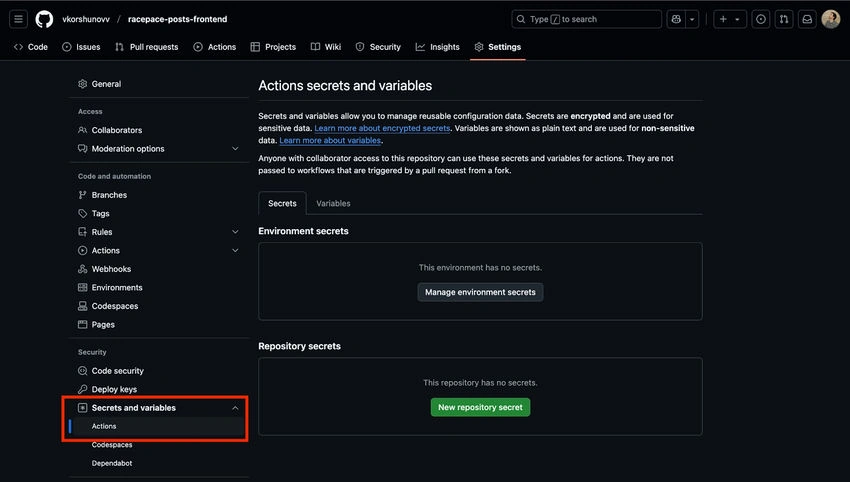
In your GitHub repository, navigate to Settings > Secrets and variables > Actions and add the following secrets:
- AZURE_CREDENTIALS: JSON containing your Azure authentication details.
- AZURE_SUBSCRIPTION_ID: Your Azure subscription ID.
- AZURE_ML_WORKSPACE: Name of your Azure ML workspace.
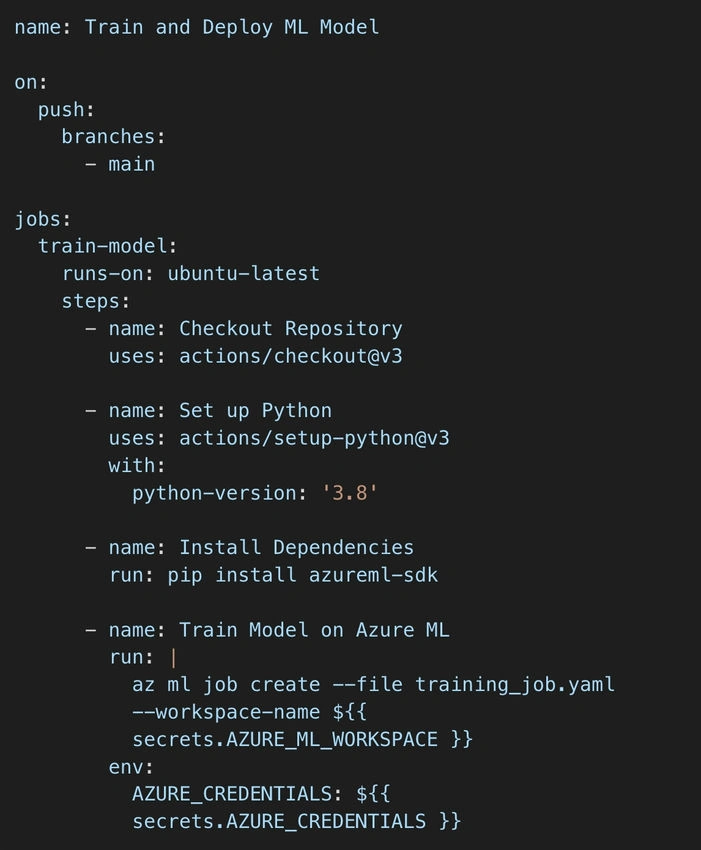
Step 2. Define a GitHub Actions Workflow
Create a YAML workflow file in .github/workflows/train_model.yml:
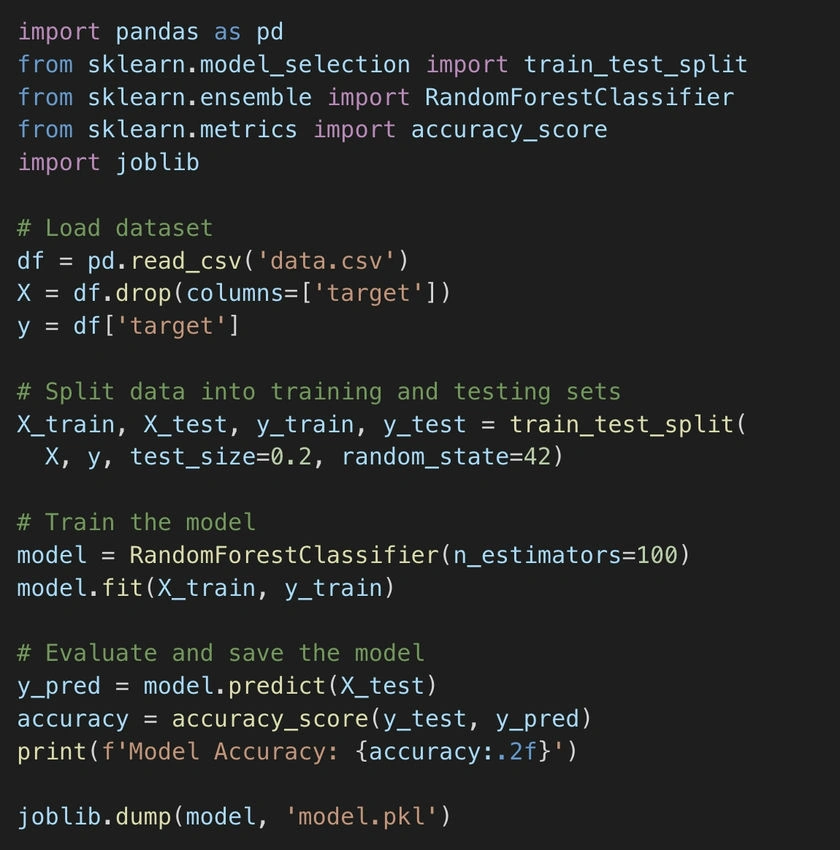
Training a Model in Azure ML with GitHub Actions
A training script (train.py) should be included in your repository. Below is an example using Scikit-learn:
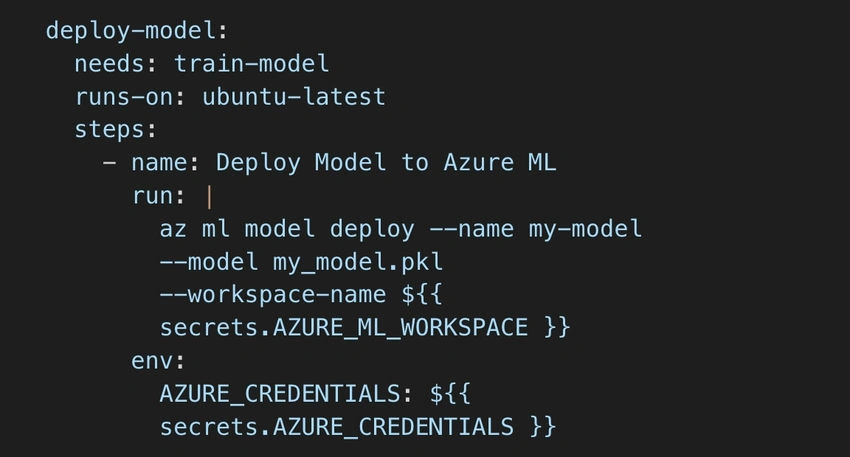
Step 3. Automate Deployment
Once the model is trained, you can extend the workflow to deploy it as a web service on Azure ML. Add a deployment step:
Best Practices for MLOps Automation
To make the most of your MLOps pipeline, consider these best practices:
- ✔ Use Infrastructure as Code (IaC) to manage Azure resources programmatically.
- ✔ Implement Model Versioning to track changes and rollback if needed.
- ✔ Monitor Model Performance using Azure ML's built-in monitoring tools.
- ✔ Schedule Automated Retraining to keep models up-to-date with the latest data.
- ✔ Use GitHub Actions Artifacts to store logs, datasets, and model files for better traceability.
- ✔ Incorporate Automated Testing to validate model performance before deployment.
- ✔ Leverage Notifications to receive alerts when a job fails or a model's performance degrades.
Conclusion
Integrating GitHub Actions with Azure ML enables teams to streamline the MLOps workflow, ensuring models are trained, evaluated, and deployed efficiently. This automation not only reduces manual effort but also enhances reproducibility and reliability in production ML applications.
By implementing MLOps best practices, organizations can create scalable, automated, and reliable ML pipelines. The integration of GitHub Actions and Azure ML simplifies the operational overhead, allowing data scientists and engineers to focus more on model innovation rather than deployment challenges.
With these steps, you can build an end-to-end MLOps pipeline that ensures your models are always trained on the latest data, monitored for performance drift, and deployed with minimal intervention.
🔗 Further Learning
Join the conversation! Your thoughts help the community grow.