

Introduction
In modern software development, where web applications evolve rapidly, automation testing needs to keep up. As test cases grow in number and complexity, maintainability and reusability become challenging. The Page Object Model (POM) is a design pattern in Selenium test automation that addresses this problem. It encapsulates web elements and actions in dedicated classes, each representing a page or a component of your application. This ensures your codebase remains clean, modular, and easy to maintain even as your UI changes.
What Is the Page Object Model?
The Page Object Model (POM) is a design pattern that:
- Creates an object repository for web UI elements.
- Encapsulates operations and flows performed on the page.
- Separates test logic from the page structure.
Each web page (or a distinct component) in the application has a corresponding class. This class contains:
- Web element locators.
- Methods that perform operations on those elements.
Benefits of the Page Object Model
- Separation of Concerns: Test logic is separated from the UI structure.
- Improved Maintainability: Change in UI affects only the Page class, not all tests.
- Reusability: Page methods can be reused across multiple tests.
- Readability: Tests look more like step-by-step scenarios.
- Scalability: Easily scalable as your project grows.
Project Structure Example
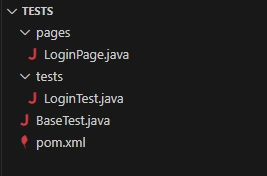
Step by Step Implementation
1. pom.xml: Add Selenium Dependencies
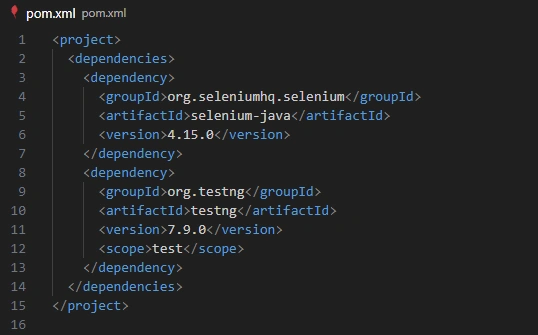
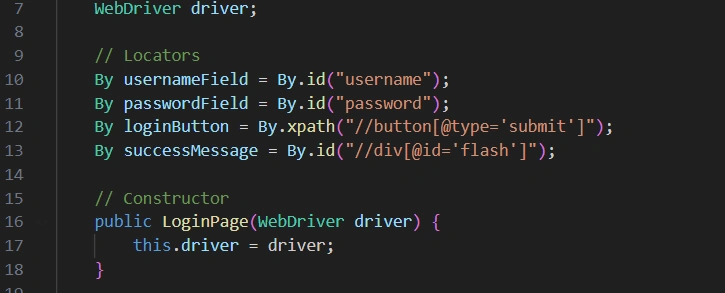
2. LoginPage.java : Page Object Class
Locators and Constructors
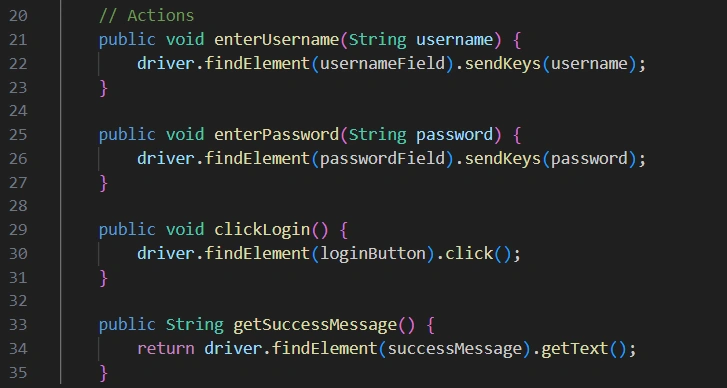
Actions
3. BaseTest.Java: WebDriver Setup and Teardown
You can set up the browser by using the following line.

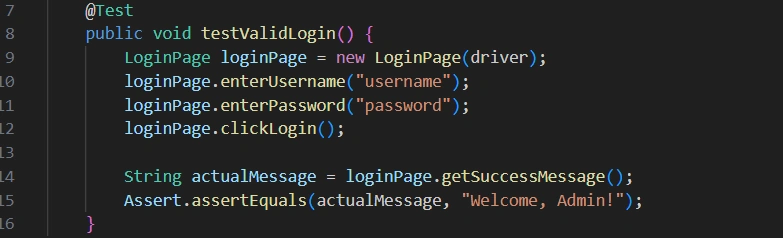
4. LoginTest.java: Test Class
This test method verifies a successful login using valid credentials. It uses the Page Object Model to interact with the login page, enters the username and password, clicks the login button, and asserts that the expected welcome message ("Welcome, Admin!") appears after login.
5. Expected Result
When the test runs
- The browser opens and navigates to
https://example.com/login(your url) - Inputs the username and password
- Clicks the login button
- The validation message appears
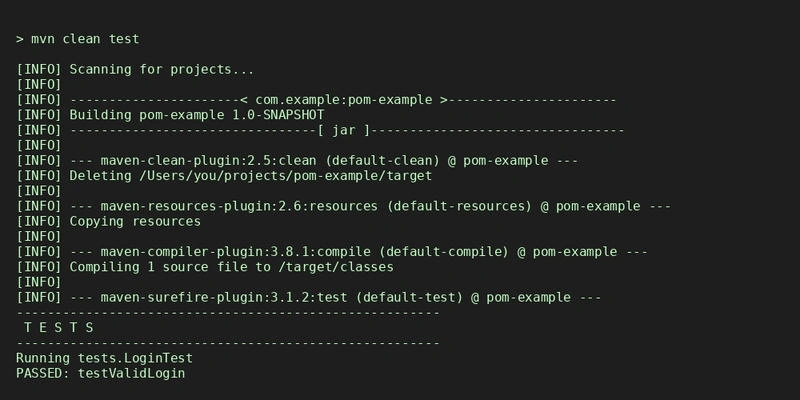
If everything works, the test will pass with the output:
Conclusion
The Page Object Model is not just a pattern; it's a strategy for writing clean, maintainable, and scalable test automation code. Whether you're testing a small site or a large enterprise application, POM provides the abstraction and modularity you need to build a professional and robust automation framework.
Join the conversation! Your thoughts help the community grow.