

Introduction
Artificial Intelligence has become prevalent to resolve complex problems in our world throughout different sectors.
Developers, data scientists and researchers across different disciplines use this technology to make their lives easier. For example, doctors use AI to classify whether a tumor is malignant or benign, commercials are using AI to predict customer features, and meteorologists use AI to predict the weather.
The impetus behind such ubiquitous use of AI is machine learning prediction. This is applicable to every real complex problem which we cannot solve manually.
In this post, I write about the linear regression problem, used to predict a real-valued output based on independent predictors.
It is a very simple approach for supervised learning. This method is mostly used for forecasting and finding out cause and effect relationship between variables (X,Y)
Mathematically, we can write a linear relationship as,
Y= beta0+ beta1 x1 + beta2 x2 + … + betan xn
- Y : The predictive result
- Beta : The Model coefficients (is learned in the training step)
- Beta0 : The intercept
- Beta1 : first feature
- Betan : the nth feature
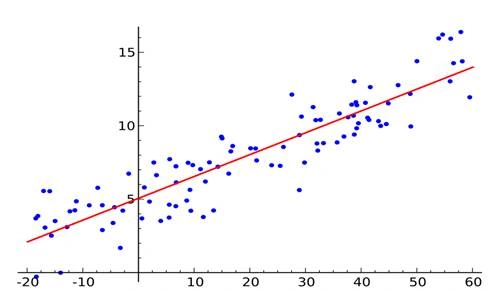
Based on the given data points we draw the graph. Then we draw the line that regroups the max of point in the above graph is referred to as the best fit straight line.
The raining process of the model. it’s way when we can find out coefficients for the linear function (beta)
The cost function is the fact of minimizing the error.
To estimate the coefficients, we use gradient Descent, Start with some values of the coefficients/parameters, beta0=0, beta1=0, keep changing beta0 and beta1 until we obtain the best result.
How to create a regression model on Azure ML
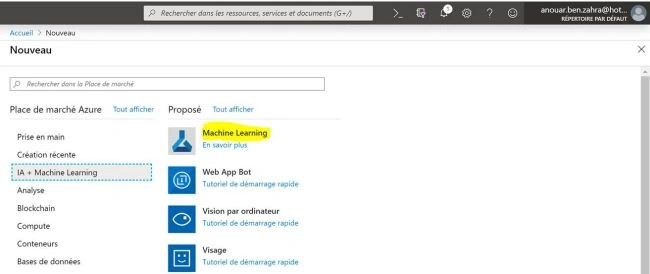
Go to portal azure and search for Machine learning on IA+ Machine Learning.
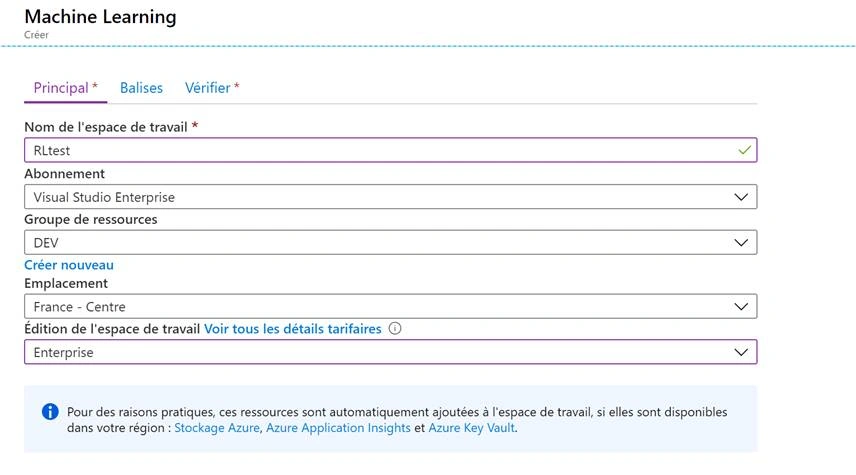
Create the workspace
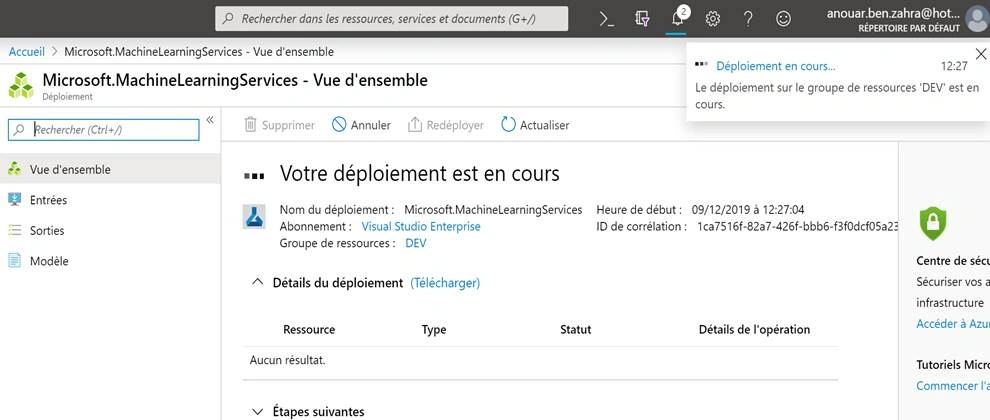
Deploy the model
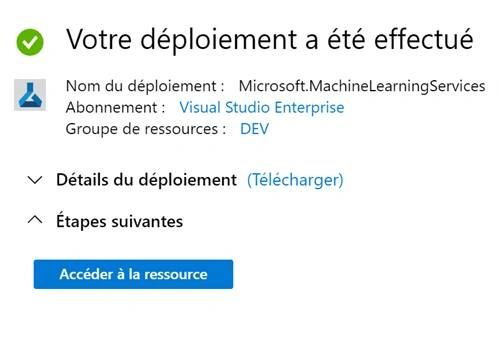
Access the resource
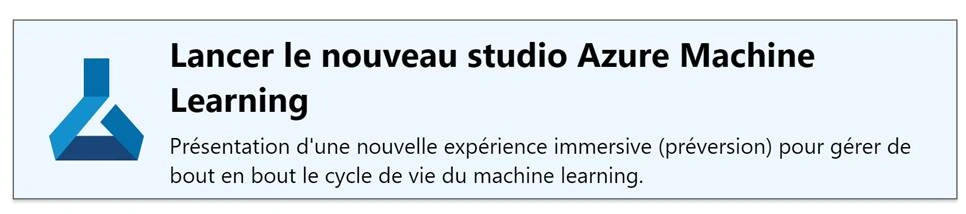
Lanch AML service
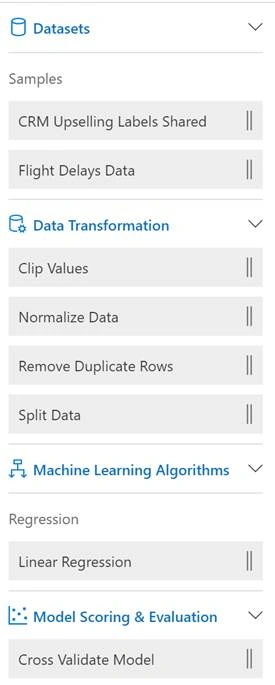
And drag and drop the box
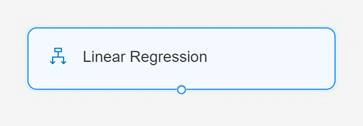
After training is complete,
- To view the model's parameters, right-click the trainer output and select Visualize.
- To make predictions, connect the trained model to the Score Model module, along with a dataset of new values.
- To perform cross-validation against a labeled data set, connect the untrained model to Cross-Validate Model.
Join the conversation! Your thoughts help the community grow.