

Llama LLM: Unleashing Advanced Language Capabilities
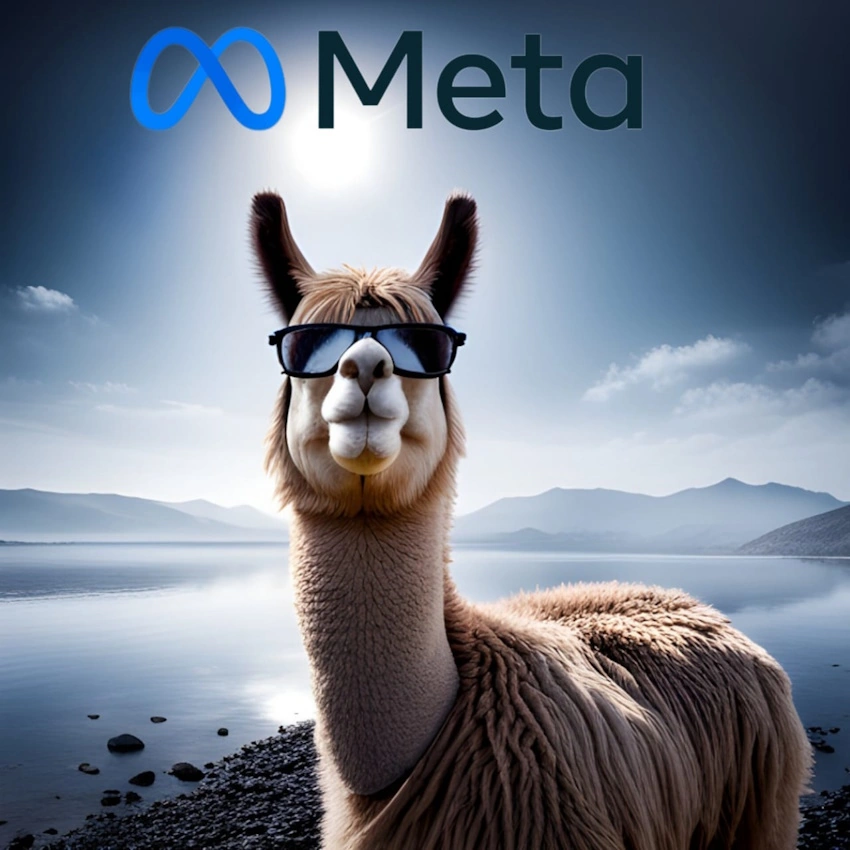
In the realm of artificial intelligence, language models have made remarkable strides in understanding and generating human-like text. One such innovation is the Llama LLM (Language and Learning Model). Llama LLM is a cutting-edge language model that builds upon the advancements of its predecessors (GPT and others), paving the way for more sophisticated natural language processing (NLP) applications.
The Evolution of Language Models

The evolution of language models (LLMs) began with basic rule-based chatbots like Eliza, which struggled to understand human nuances. Later advancements introduced neural networks, giving rise to models like GPT-3, capable of generating remarkably human-like text. Today, Transformer architectures and extensive datasets power models such as PaLM and Llama, expanding capabilities in translation, personalized experiences, and code generation. Despite existing challenges, these advanced models signal a future where language acts as a bridge, connecting us to information and creativity in unprecedented ways.
What is Llama LLM?
Llama LLM is a family of large language models (LLMs) developed by Meta AI. It was first released in February 2023. Its strengths lie in understanding and generating human language across tasks, including translation, summarization, and creative writing. Employing advanced techniques like mixed precision training and checkpoint ensembling, Llama aims to deliver accurate, fluent, and adaptable outputs, paving the way for exciting NLP applications in research, education, and beyond.
Architectural Foundations
The foundation of Llama LLM lies in the Transformer-based encoder-decoder architecture. This structure allows for efficient processing of both input sequences (encoding) and corresponding output sequences (decoding).
- Encoder: The encoder utilizes multiple self-attention layers to analyze the relationships between words within an input sequence. This process captures contextual information and builds a rich internal representation of the data.
- Decoder: The decoder leverages attention mechanisms to utilize the encoded representation while generating the output sequence. It dynamically predicts the next word based on the previously generated content and the encoded context.
Several architectural enhancements further amplify Llama LLM's performance and efficiency.
- Massively Parallel Processing: This technique employs multiple GPUs or TPUs to operate on the model simultaneously, enabling faster computation and handling of large datasets.
- Mixed Precision Training: This optimization utilizes a combination of data types (e.g., 32-bit and 16-bit floating-point) during training, improving computational efficiency without sacrificing accuracy.
- Checkpoint Ensembling: By periodically saving checkpoints and averaging their predictions, the model achieves more robust and accurate outputs.
Training and Data
Llama LLM thrives on a colossal dataset of text and code encompassing diverse sources like books, articles, code repositories, and web documents. This variety equips the model with a broad understanding of language nuances and allows it to perform various tasks effectively.
Meta AI prioritizes several essential principles within the training process.
- Data Filtering and Cleaning: Extensive filtering and cleaning processes are applied to the dataset to mitigate biases and ensure data quality.
- Curriculum Learning: The training process adopts a gradual approach, introducing the model to more complex tasks as its capabilities improve.
- Continuous Learning: The model can be further fine-tuned on specific tasks or domains, enhancing its performance in targeted areas.
Key Features of Llama LLM
Llama LLM offers a diverse spectrum of functionalities, making it a versatile tool for various NLP applications. Here are some key highlights.
- Text Generation: Llama can generate human-quality text in various styles and formats, including creative writing, factual summaries, and even code snippets.
- Language Translation: The model translates between numerous languages with high accuracy and fluency, preserving stylistic nuances and cultural context.
- Question Answering: Llama understands the intent behind questions and retrieves relevant information from its knowledge base or the internet to provide comprehensive and informative answers.
- Text Summarization: The model can concisely summarize complex texts, identifying key points and preserving the core meaning while reducing redundancy.
- Code Generation and Completion: Llama can generate new code from natural language descriptions or complete existing code snippets, demonstrating its understanding of programming languages and syntax.
Potential Applications of Llama LLM
Llama LLM's advanced language capabilities open the door to a wide array of applications.
- Content Generation: Content creators can leverage Llama's text generation capabilities to draft product descriptions, marketing copy, or even blog posts. Azure Cognitive Services can analyze existing content for style and tone, providing Llama with guidance to maintain consistency and brand voice.
- Customer Support: Imagine a customer chatbot powered by Llama. It interacts with customers, understanding their queries and emotions using Azure Text Analytics. Llama then crafts personalized responses, drawing on its linguistic expertise and adapting its tone to match customer sentiment. For complex issues, it seamlessly transfers the conversation to human agents.
Integrating Azure's Language Understanding service with Llama can provide access to your knowledge base. This allows Llama to retrieve relevant information like product manuals or troubleshooting guides, dynamically crafting personalized solutions for each customer's specific problem.
- Educational Assistance: Llama can personalize learning experiences for students. It can generate tailored study materials, provide dynamic feedback on assignments, and answer complex questions, drawing on its vast knowledge base and Azure Cognitive Services' knowledge extraction capabilities.
Researchers can utilize Llama's language understanding to analyze large volumes of text data. It can identify key themes, extract relationships between entities, and generate summaries, enabling researchers to make faster and more informed insights.
- Revolutionizing Software Development: Programmers can utilize Llama as a powerful coding assistant. It can complete code snippets, generate documentation based on existing code, and even suggest alternative approaches or solutions, leveraging its understanding of programming languages and logic.
Azure Bot Service comes into play here. Integrate Llama with a coding-focused chatbot built on Azure. Developers can interact with the chatbot in natural language, describing desired functionalities or requesting bug fixes. Llama then generates the relevant code, which the chatbot can test and iterate on.
Challenges and Future Directions
Despite its remarkable capabilities, Llama LLM faces certain challenges that require ongoing research and development efforts.
- Bias and Fairness: Mitigating potential biases present in the training data and ensuring fair and inclusive model outputs is a critical ongoing challenge.
- Explainability and Interpretability: Understanding how the model arrives at its outputs is crucial for building trust and transparency. Improving the interpretability of LLMs remains an active research area.
- Safety and Security: Ensuring the safe and responsible use of LLMs, preventing misuse and harmful content generation, requires robust safeguards and ethical considerations.
Meta AI implements a multi-pronged approach to mitigate ethical considerations in the development of Llama LLM. Training data curation focuses on diversity across languages, cultures, and viewpoints to minimize inherent biases. Algorithmic fairness techniques flag and mitigate biased outputs, iteratively refining Llama's ability to generate fair and inclusive language. Transparent documentation and user prompts highlight limitations and potential biases, empowering responsible user interaction. Additionally, proactive external collaboration with researchers and ethicists fosters ongoing dialogue and adaptation to evolving ethical concerns in the LLM field. While the complete elimination of bias and harmful content remains an ongoing challenge, Meta AI's efforts demonstrate a commitment to the responsible development of Llama as a reliable and ethical language generation tool.
Conclusion
Llama LLM represents a significant leap forward in the evolution of language models. Its contextual understanding, nuanced comprehension, and multilingual proficiency make it a versatile tool for a wide range of applications across industries. As we continue to push the boundaries of AI and NLP, Llama LLM stands as a testament to the progress we've made and the exciting possibilities that lie ahead. With responsible usage and ongoing development, Llama LLM can contribute to more efficient, effective, and engaging interactions in the digital landscape.
Learn more about how to use LLAMA on Microsoft Azure - it's an exciting story.
Join the conversation! Your thoughts help the community grow.