

This is the 13th part of this article series about Python. In this article series you will learn Python step-by-step and in an easier way.
Getting Theme
For getting the theme of Python, kindly go through my previous articles:
- Diving Into Python : Chapter 1
- Diving Into Python : Chapter 2
- Diving Into Python : Chapter 3
- Diving Into Python : Chapter 4
- Diving Into Python : Chapter 5
- Diving Into Python : Chapter 6
- Diving Into Python : Chapter 7
- Diving Into Python : Chapter 8
- Diving Into Python : Chapter 9
- Diving Into Python : Chapter 10
- Diving Into Python : Chapter 11
- Diving Into Python : Chapter 12
Function
A function in programming terms can be defined as “a block of reusable, managed code block that is used to perform any certain single operation.”
Functions provide better functioning for your application and a high degree of code reusability.
We can also call it a machine that gives desired outputs depending on our input. Something like the following: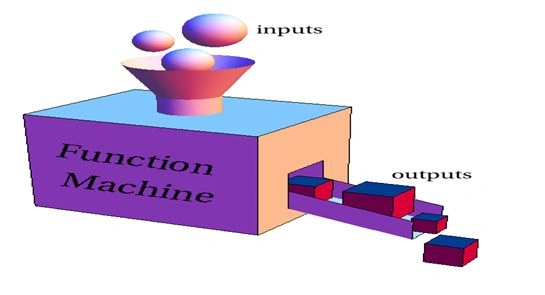
Python contains several types of built-in functions such as print(), del, len and so on. These types of functions are called built-in functions, but still, like several other programming languages, they provide complete freedom to create your own functions based on your requirements. These types of functions are called user-defined functions.
Creating a Function
As I said earlier, you can create your own built-in functions. So let's have a look at how to create a function.
The following are the set of rules that you need to follow when creating a function:
- A function block in Python begins with a keyword def.
- A function name after that keyword "def" and parentheses "()".
- Any input parameter or arguments for a specific functionality should be placed between these parentheses.
- An optional statement, "fun_docstring" is followed by the parentheses, but it's optional.
- For accessing and invoking a function In Python, we should use a colon ":".
- Then your function or some set of code for performing certain operation.
- Finally a return statement.
Structure
Let's have a look at the structure:
Def funcname (parameters):
“func_docstring”
Func_suite
return [expression]
Example
Creating several basic functions.
# Function: Add
def add(a, b):
print ("Adding : %d + %d" % (a, b))
return a + b
# Function: Subtract
def subtract(a, b):
print ("Subtracting : %d - %d" % (a, b))
return a - b
# Function: Multiply
def multiply(a, b):
print ("Multiplying : %d * %d" % (a, b))
return a * b
# Function: Divide
def divide(a, b):
print ("Dividing : %d / %d" % (a, b))
return a / b
print ("Let's use the functions created by us")
# Calling Functions
A = add(5, 5)
B = subtract(5, 6)
C = multiply(6, 5)
D = divide(5, 5)
print ("A : %d | B : %d | C : %d | D : %d" % (A, B, C, D))
Output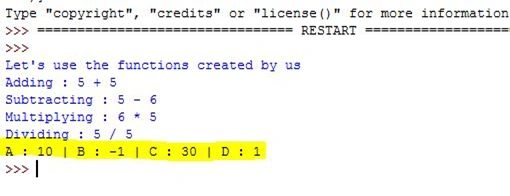
Calling a Function
Creating a function is just 50% of the entire work, moreover for performing certain operations you need to call that function later in your code snippet. So let's have a look at how it can be done in Python.
Once the basic block of function is formed, here are the approaches that you need to use when calling a function in Python.
Function Calling | Approaches
Here are some approaches: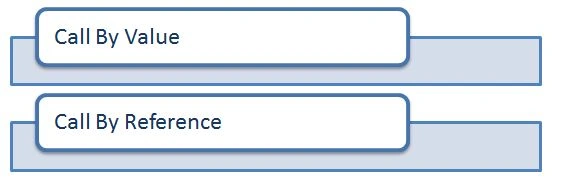
- Call By value
- The most common strategy of parameter or argument passing is call-by-value, sometimes it is also called pass-by-value. This strategy is used in several programming languages like C, C#, Java, C++ and so on.
- In the call by value approach the argument expression is evaluated first and the result of this evaluation is bound to the corresponding variable in the function. So, if the expression is a variable, a local replica of its value will be used.
- Here's how it works: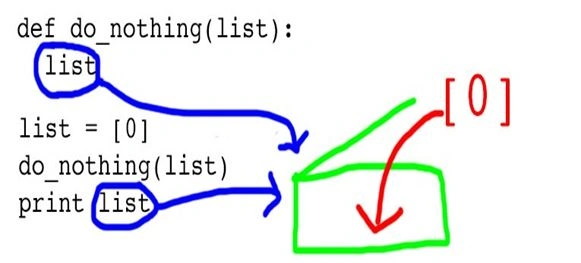
Explanation
Here a replica of the list (all the values and elements in it) are used for a functionality via passing a value.
- Call By Reference
- In a call by reference approach, a function gets an implicit reference to the argument rather than a copy of its value. As a result, the function can modify the argument and the value of the variable in the caller's scope can be changed.
- This strategy is also known as pass by reference and is used in several programming languages, such as C, C#, Java, C++ and so on.
- The advantage of call by reference is greater time and space efficient because arguments do not need to be copied.
- Here's a sample functionality: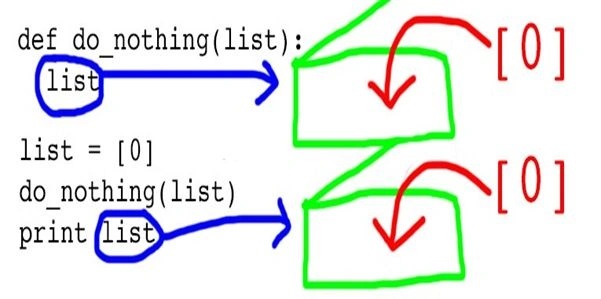
Explanation
In this approach, it works slightly differently. Here there are two locations and for both of the locations only a reference is being used instead of the replica itself.
In Python you can call a function using these types of arguments:
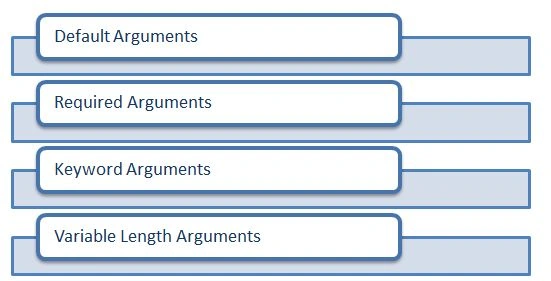
- Default Arguments
As the name suggests, a default argument always assumes a default value in case there is no value provided in the function call for a specific argument.
Example
def empinfo(name = "ABC", designation):
print ("Name : ", name)
print ("Designation : ", designation)
return;
empinfo( designation = "Dev" )
Output
Now let us see some changes in the code and call the function again for a different pair or a different value:
def empinfo(name = "XYZ", designation):
print ("Name : ", name)
print ("Designation : ", designation)
return;
empinfo( name = "ABC", designation = "Dev" )
empinfo( designation = "Dev" )
Output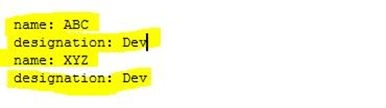
- Required Arguments
Required arguments are those that are passed to a function in a proper positional / hierarchical order. In Python, the number of arguments in the function call should be exactly same as the function definition.
Example
def callme( str ):
"This prints a passed string into this function"
print (str)
return;
callme();
Output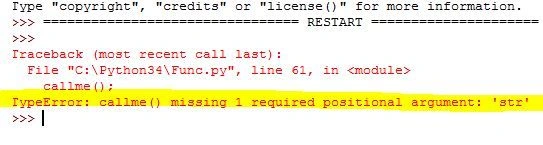
Explanation
As I explained in the preceding paragraph, a required argument needs to pass one argument in the callme function and we didn't do that. That's why the snippet is showing an error.
But if you pass an argument then it will produce an output for sure.
- Keyword Arguments
Keyword arguments are somehow similar to the function calls. Whenever you use keyword arguments in a function call, it is identified by the parameter name directly.
There are many advantages to the use of this approach, these are:
- it allows you to skip the arguments.
- Even you can place the arguments out of order.
- You can also make keyword calls (using function name).
def callme( str ):
print (str)
return;
callme( str = "Calling that function");
Output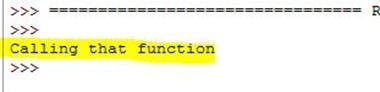
Explanation
If you haven't yet gotten the theme then don't worry. Let's explore it with a similar type of example as we used for the default try arguments, to provide you a clear view.
def empinfo(name , designation):
print ("Name : ", name)
print ("Designation : ", designation)
return;
empinfo( name = "ABC", designation = "Dev" )
Output
(I hope now it will be clear to you guys.)
- Variable Length Arguments
All the three above specified arguments are enough to perform any operation, but still you may need to process a function for more arguments than you specified. For that, here comes the concept of Variable Length Arguments.
Example
def callme( arg, *vartuple ):
print ("India??")
print (arg)
for var in vartuple:
print (var)
return;
callme( "Democracy", "or", "Gerontocracy")
Output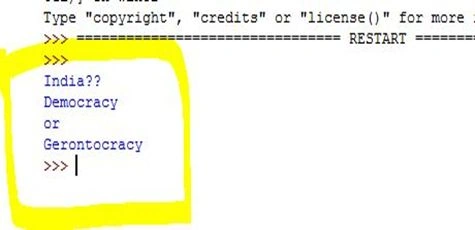
- Do as much as code you can
- Code anything you want, the best way to learn
- Don't just study things, try to learn them
- Work on your Concepts
- Work on the fundamentals of any technology or stuff you want to learn
Moto
“Keep calm and code Python”.
I tried to make it an interesting and interactive article and wish you guys like that, meanwhile if you have any suggestions then your welcome.
Until the next part, keep sharing!
Sibeesh VenuPosted May 30, 2015, 1:11 PM
Good one.
Santhakumar MunuswamyPosted May 30, 2015, 12:21 PM
Thanks for nice article...
Shailesh UkePosted May 30, 2015, 9:17 AM
Nice ...
NitinPosted May 30, 2015, 8:20 AM
Good one
Kiranteja JallepalliPosted May 30, 2015, 5:53 AM
very nice Abhi
Abhishek JaiswalPosted May 29, 2015, 11:13 PM
Thank you!! :)
Santhakumar MunuswamyPosted May 29, 2015, 1:06 PM
Thanks for good show
Abhishek JaiswalPosted May 29, 2015, 11:19 AM
Ahh thanks buddy!! :)
Gopi ChandPosted May 29, 2015, 8:24 AM
Great explanation