

The number guessing game is a classic beginner project that introduces core programming concepts in a fun and engaging way. In this article, we'll walk through creating a number-guessing game in Java, explaining the code, and showcasing example output1. The game involves the computer generating a random number and the player attempting to guess that number within a certain range.
Number guessing Game Logic
Here's the basic outline of how the game works:
- Number Generation: The computer randomly selects a number within a specified range (e.g., 1 to 100).
- User Input: The player is prompted to enter their guess.
- Comparison: The player's guess is compared to the computer's number.
- Feedback:
If the guess is too high, the player is told to guess lower.
If the guess is too low, the player is told to guess higher.
If the guess is correct, the player is congratulated, and the game ends. - Attempts: The game continues until the player guesses correctly. Some implementations limit the number of tries.
Code example
import java.util.Random;
import java.util.Scanner;

public class NumberGuessingGame {

    public static void main(String[] args) {
        Random rand = new Random();
        int numberToGuess = rand.nextInt(100) + 1; // Generates random number between 1 and 100
        Scanner scanner = new Scanner(System.in);
        int guess;

        System.out.println("Welcome to the number guessing game!");
        System.out.println("Guess a number between 1 and 100:");

        while (true) {
            guess = scanner.nextInt();

            if (guess == numberToGuess) {
                System.out.println("Congratulations, you guessed the number!");
                break;
            } else if (guess < numberToGuess) {
                System.out.println("Your guess is too low. Try again:");
            } else {
                System.out.println("Your guess is too high. Try again:");
            }
        }

        scanner.close();
    }
}
Explanation
- Import Statements: The code imports the Random and Scanner classes.
- Random Number Generation: A Random object generates a random integer between 1 and 100 (inclusive)1. nextInt(100) produces a number from 0-99, so we add.
- User Input: The Scanner class is used to read the player's guess from the console.
- Game Loop: A while loop continues until the player guesses the correct number.
- Conditional Statements: Inside the loop, if-else if-else statements provide feedback to the player based on their guess.
- Closing Scanner: The scanner.close() statement releases resources.
Output
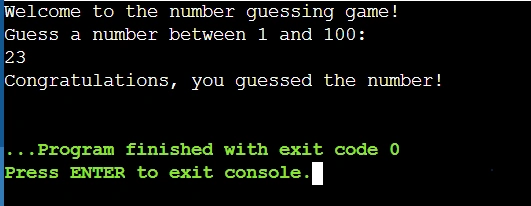
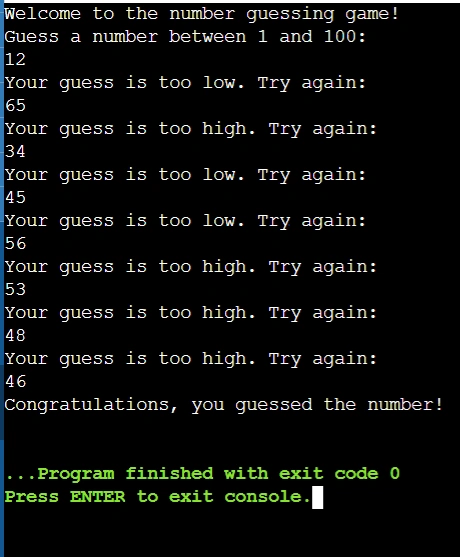
Enhancements
Here are some ways to enhance the game:
- Limit the Number of Guesses: Add a counter to track the number of guesses and end the game if the player runs out of attempts.
- Difficulty Levels: Allow the player to choose a difficulty level, which affects the range of numbers or the number of allowed guesses.
- Input Validation: Add error handling to ensure the player enters a valid integer.
- GUI: Implement a graphical user interface (GUI) for a more user-friendly experience.
Conclusion
The number guessing game is a simple yet effective project for learning basic programming concepts in Java1. This article provides a clear and concise guide to building the game, along with suggestions for enhancements to make it more challenging and engaging.
Join the conversation! Your thoughts help the community grow.