

Introduction
Spring Boot is a Java-based and open-source framework that simplifies the development of robust and scalable applications. It follows the "convention over configuration" approach, reducing boilerplate code and allowing developers to focus on business logic. With its embedded container, Spring Boot eliminates the need for deploying applications on external servers. This Article highlights the framework's core principles, emphasizing its ability to streamline Java development and empower developers to build high-performance applications efficiently.
Prerequisites of Spring Boot Framework

- Java Development Kit (JDK): Install JDK 8 or later, as Spring Boot requires Java 8 or higher.
- Spring Tool Suite (STS): Download and install the latest version of STS, a specialized IDE for Spring-based development.
- Build Tool (Optional): While STS includes Maven support by default, you can install Gradle for build automation if preferred.
- Spring Boot Project Template: STS provides project templates that simplify creating Spring Boot applications. Ensure you have the appropriate template installed or update STS to the latest version for the latest templates.
- Web Browser: For running and testing web applications, having a web browser is essential.
What is Spring Boot Framework in Java
Spring Boot is a Java framework that makes it easy to create and run powerful web applications. It simplifies the development process by providing default configurations and eliminating the need for boilerplate code. With Spring Boot, you can build stand-alone applications that are ready to run without a separate web server. Its user-friendly approach allows developers to focus on writing business logic, making it an excellent choice for building scalable and efficient Java applications with minimum effort.
Why should We use Spring Boot Framework?
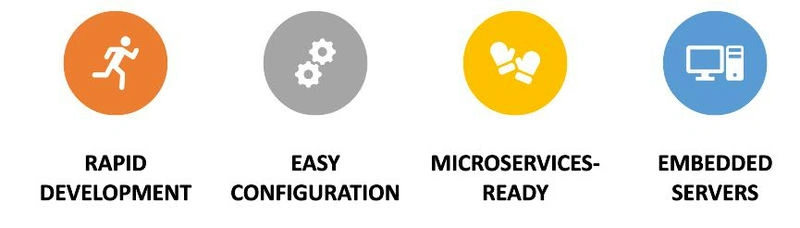
We should use Spring Boot Framework because
- Rapid Development: Spring Boot's opinionated approach and built-in defaults enable developers to start projects quickly, reducing setup time and boilerplate code.
- Easy Configuration: With Spring Boot's auto-configuration, most components are automatically configured, simplifying application setup and reducing manual configuration efforts.
- Microservices-ready: Spring Boot's lightweight design and seamless integration with Spring Cloud make it an ideal choice for building microservices architectures.
- Embedded Servers: Spring Boot's embedded servers eliminate the need for deploying applications on external servers, making deployment and testing more straightforward and efficient.
Goals of Spring Boot Framework
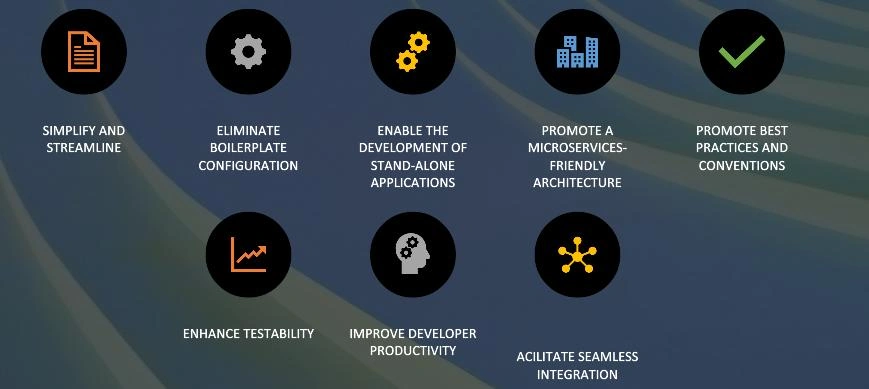
The main goal of Spring Boot is to reduce development, unit test, and integration test time.
- Simplify and streamline the development process.
- Eliminate boilerplate configuration and reduce setup time.
- Provide a powerful and opinionated framework for building production-ready applications.
- Enable the development of stand-alone applications with embedded servers for easy deployment.
- Promote a microservices-friendly architecture.
- Offer a vast ecosystem of starter dependencies and libraries for quick integration.
- Facilitate seamless integration with other Spring projects.
- Promote best practices and conventions to enhance code consistency.
- Improve developer productivity and maintainability of applications.
- Enhance testability and support test-driven development (TDD).
Spring Boot Framework Features
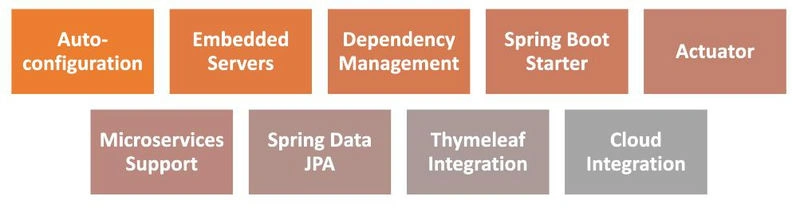
- Auto-configuration: Automatic setup of components based on classpath and settings.
- Embedded Servers: Integrated servers like Tomcat or Jetty for deployment.
- Dependency Management: Simple and effective management of project dependencies.
- Spring Boot Starter: Pre-configured dependencies for specific functionalities.
- Actuator: Built-in monitoring and management features.
- Annotation-based: Extensive use of annotations for configuration.
- Production-Ready: Features that facilitate easy production deployment.
- Simplified Security: Simplified and customizable security configuration.
- Microservices Support: Well-suited for building microservices architectures.
- Command-Line Interface (CLI): Tools for creating and testing applications from the command line.
- Spring Data JPA: Simplified data access through JPA repositories.
- Thymeleaf Integration: Seamless integration with the Thymeleaf template engine.
- Testing Support: Extensive support for unit and integration testing.
- External Configuration: Externalize configuration using properties or YAML files.
- Logging Support: Integrated logging configuration with common logging frameworks.
- Profiles: Define profiles for different environments.
- DevTools: Improved development experience with automatic restart and more.
- Easy RESTful APIs: Build RESTful APIs with ease.
- Cloud Integration: Integration with cloud platforms like AWS and Azure.
- Flexible Database Support: Support for various databases like MySQL, PostgreSQL, etc.
Structure of a Spring Boot Application
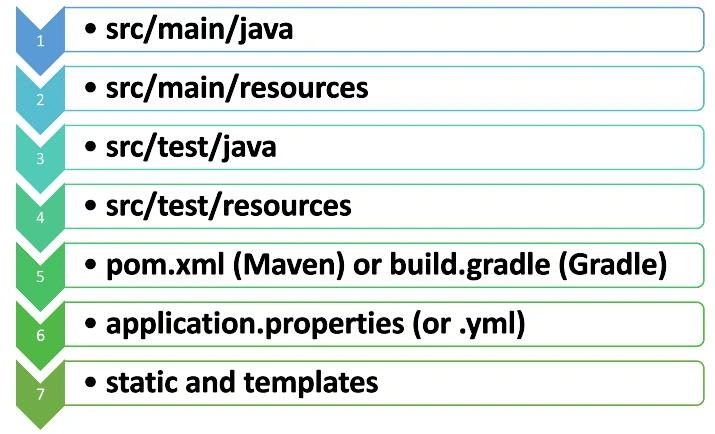
A Spring Boot application follows a well-defined structure to organize its components and resources. Understanding this structure is crucial for developers to build scalable and maintainable applications. Let's explore the basic structure of a Spring Boot application:
- src/main/java: This directory contains the Java source code of your application. The main application class (usually annotated with `@SpringBootApplication`) serves as the entry point.
- src/main/resources: Configuration files and resources reside here. Application properties, YAML files, and static resources (HTML, CSS, etc.) can be placed in this directory.
- src/test/java: Unit and integration test classes are placed in this directory. Spring Boot encourages extensive testing to ensure application stability.
- src/test/resources: Test-specific configuration and resource files are placed here. These resources are used during the test execution.
- pom.xml (Maven) or build.gradle (Gradle): The project build file defines project dependencies, plugins, and configurations.
- application.properties (or .yml): This file contains application-specific configurations like database settings, server port, etc.
- static and templates: These directories contain static resources and templates used for web applications (if applicable).
- @RestController: This annotation marks classes as controllers that handle HTTP requests and return JSON or XML responses.
- @Service: This annotation marks classes as service components responsible for business logic.
- @Repository: This annotation marks classes as data access components (repositories) for database interactions.
- @Autowired: This annotation allows automatic dependency injection for Spring-managed beans.
- @RequestMapping: This annotation maps HTTP requests to specific methods in controller classes.
Overall, Spring Boot's well-structured application layout, coupled with its annotations and auto-configuration, simplifies the development process and enhances application maintainability.
Advantages of Spring Boot Framework
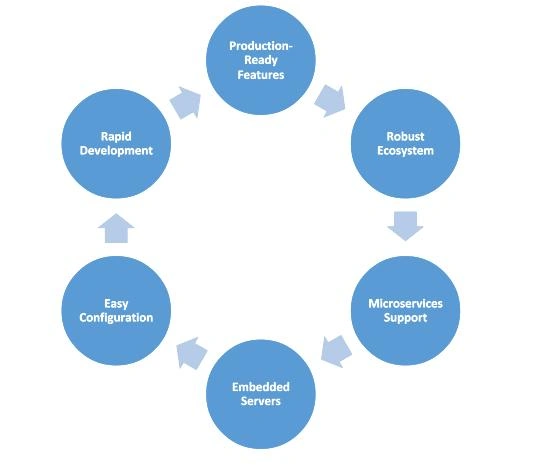
- Rapid Development: Spring Boot's convention-over-configuration approach and built-in defaults allow for quick and efficient development, reducing boilerplate code.
- Easy Configuration: Auto-configuration simplifies application setup, reducing the need for manual configuration and saving development time.
- Embedded Servers: Spring Boot's embedded servers eliminate the need for deploying applications on external servers, making deployment and testing more straightforward.
- Microservices Support: Spring Boot's lightweight design and seamless integration with Spring Cloud make it an excellent choice for building microservices architectures.
- Robust Ecosystem: Spring Boot benefits from a vast ecosystem of starters and libraries, enabling developers to integrate with various technologies effortlessly.
- Production-Ready Features: Spring Boot includes features like health checks, monitoring, and externalized configuration that facilitate production deployment.
Disadvantages of Spring Boot Framework
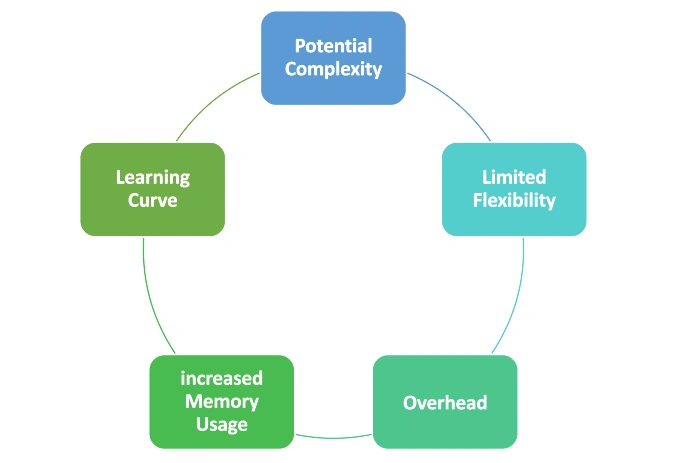
- Learning Curve: The framework's extensive features can result in a steep learning curve for beginners, especially those new to the Spring ecosystem.
- increased Memory Usage: As a result of auto-configuration and starters, Spring Boot applications may consume more memory compared to non-framework applications.
- Overhead: Spring Boot's opinionated design may introduce unnecessary components and dependencies, resulting in increased application size and startup time.
- Limited Flexibility: While the opinionated approach simplifies development, it may limit developers' flexibility to choose specific configurations and libraries.
- Potential Complexity: As projects grow, maintaining and understanding complex auto-configurations may become challenging for large-scale applications.
Conclusion
Basics of Spring Boot Framework in Java provides a powerful and user-friendly solution for building modern web applications. By simplifying the development process, eliminating boilerplate code, and offering embedded servers, Spring Boot streamlines application creation and deployment. Its extensive ecosystem, including starters and libraries, further enhances productivity and promotes best practices. While there may be a learning curve, mastering Spring Boot opens up opportunities to build scalable, production-ready applications with ease. Embracing Spring Boot empowers developers to focus on business logic, making it a valuable framework for Java developers seeking efficiency and simplicity in their projects.
Join the conversation! Your thoughts help the community grow.