

What is DevOps?
DevOps represents a cultural and technical shift in how software is developed, delivered, and maintained. The goal of DevOps is to shorten the development lifecycle while delivering high-quality software continuously. DevOps emphasizes collaboration, communication, and integration between developers and IT operations teams. It leverages automation, continuous integration, and continuous delivery (CI/CD), infrastructure as code (IaC), and monitoring to streamline processes and enhance productivity. By fostering collaboration between development and operations, automating processes, and emphasizing continuous improvement, DevOps enables organizations to deliver software more quickly, efficiently, and reliably. As a result, businesses can innovate faster, reduce costs, and improve overall quality, all of which contribute to greater customer satisfaction and a stronger market position.
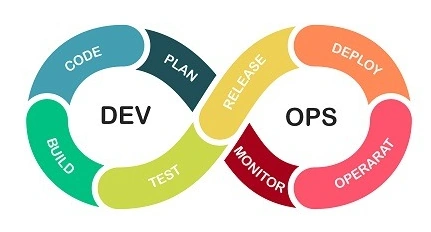
Key components of DevOps include
- Continuous Integration (CI): The practice of merging all developers’ working copies to a shared mainline several times a day to prevent integration problems.
- Continuous Delivery (CD): An extension of CI that ensures code changes are automatically prepared for a production release.
- Automation: Automating repetitive tasks to increase efficiency and reduce the risk of human error.
- Infrastructure as Code (IaC): Managing and provisioning computing infrastructure through machine-readable scripts, rather than through physical hardware configuration or interactive configuration tools.
- Monitoring and Logging: Continuously tracking and analyzing application performance and logs to ensure smooth operations and quickly address issues.
Why Do We Need DevOps?
1. Speed and Efficiency
- Faster Delivery: DevOps helps teams deliver software updates and new features more quickly. This means businesses can respond to market changes and customer needs faster.
- Automation: By automating repetitive tasks, such as testing and deployment, DevOps reduces the time and effort needed to release new software.
2. Improved Collaboration
- Teamwork: DevOps encourages better communication and collaboration between developers (who write the code) and operations (who manage the servers and infrastructure). This helps in solving problems more efficiently and reduces misunderstandings.
3. Higher Quality
- Continuous Testing: With DevOps, code is tested automatically every time it's changed. This catches bugs early, so they can be fixed before they cause bigger problems.
- Reliable Releases: Because everything is tested and automated, the software released is more reliable and less likely to break.
4. Scalability
- Easier Scaling: DevOps practices make it easier to scale applications. This means that as user demand grows, the software and infrastructure can grow with it without a lot of manual work.
- Consistent Environments: Using infrastructure as code (IaC), DevOps ensures that all environments (development, testing, production) are consistent, reducing configuration errors.
5. Continuous Improvement
- Feedback Loops: DevOps includes continuous monitoring and feedback, allowing teams to learn from each release and improve the next one.
- Adaptability: Teams can quickly adapt to new requirements or changes, making the development process more flexible.
6. Better Security
- Integrated Security: DevOps integrates security practices into the development process (DevSecOps), ensuring that security is considered from the start and vulnerabilities are addressed early.
7 Cs of DevOps
- Continuous Development
- Continuous Integration
- Continuous Testing
- Continuous Deployment/Continuous Delivery
- Continuous Monitoring
- Continuous Feedback
- Continuous Operations
Necessary Tools that we need in DevOps
DevOps relies on a variety of tools to automate and streamline processes, enhance collaboration, and ensure continuous delivery and integration. Here are ten of the best and most essential tools commonly used in DevOps:
1. Git Version Control System
Git is a distributed version control system that tracks changes in source code during software development. It facilitates collaboration by allowing multiple developers to work on the same project simultaneously.
Key Features
- Branching and merging
- Distributed development
- Strong support for non-linear development
- Popular Platforms: GitHub, GitLab, Bitbucket
2. Jenkins Continuous Integration/Continuous Deployment (CI/CD)
Jenkins is an open-source automation server that enables continuous integration and continuous delivery of projects. It automates building, testing, and deploying code.
Key Features
- Extensive plugin ecosystem
- Easy integration with other DevOps tools
- Supports distributed workloads
3. Docker Containerization
Docker is a platform that uses containerization to deliver software in packages called containers. Containers are lightweight and include everything needed to run the application.
Key Features
- Portability across different environments
- Consistency between development and production
- Isolation and security
4. Kubernetes Container Orchestration
Kubernetes is an open-source platform designed to automate deploying, scaling, and operating application containers.
Key Features
- Automated rollouts and rollbacks
- Load balancing and service discovery
- Self-healing and automated scaling
5. Ansible Configuration Management
Ansible is an open-source tool for configuration management, application deployment, and task automation. It uses a simple, human-readable YAML syntax.
Key Features
- Agentless architecture
- Simple setup and minimal learning curve
- Idempotency (repeatable tasks)
6. Terraform Infrastructure as Code (IaC)
Terraform is an open-source tool that allows you to define and provision data center infrastructure using a high-level configuration language.
Key Features
- Platform-agnostic
- Declarative configuration files
- Efficient resource management
7. Prometheus Monitoring
- Description: Prometheus is an open-source monitoring and alerting toolkit designed for reliability and scalability. It collects and stores metrics as time-series data.
Key Features
- Powerful query language (PromQL)
- Multi-dimensional data model
- Alerting capabilities
8. Grafana Monitoring and Visualization
- Description: Grafana is an open-source platform for monitoring and observability. It provides customizable dashboards and visualizations for metrics from various data sources.
Key Features
- Integration with multiple data sources
- Rich visualization options
- Alerting and notification features
9. ELK Stack (Elasticsearch, Logstash, Kibana) Logging and Analytics
- Description: The ELK Stack is a combination of three open-source products: Elasticsearch, Logstash, and Kibana, used for searching, analyzing, and visualizing log data in real time.
Key Features
- Centralized logging
- Real-time data analysis
- Customizable dashboards and visualizations
10. Nagios Monitoring
- Description: Nagios is an open-source monitoring tool that provides monitoring and alerting services for servers, network devices, and applications.
Key Features
- Extensive plugin ecosystem
- Scalability for large environments
- Comprehensive monitoring capabilities
These ten tools form the backbone of a robust DevOps environment, covering critical aspects such as version control, continuous integration and deployment, containerization, configuration management, monitoring, and logging. By integrating these tools into your DevOps pipeline, you can achieve faster delivery, higher quality, and more efficient collaboration, all while maintaining security and scalability.
Join the conversation! Your thoughts help the community grow.